Exploring Global Drone Trends, Part 1: Japan, Hong Kong, and Taiwan
 kanri
kanriDrone technology has advanced at remarkable speed. What was once confined to military or hobbyist applications has rapidly expanded into agriculture, logistics, infrastructure inspection, disaster response, and numerous other commercial sectors. The commercial drone market—already valued at more than USD 60 billion in 2024—is expected to exceed USD 1.4 trillion by 2034. This article highlights the latest developments in Japan, Hong Kong, and Taiwan, offering insights for businesses and investors evaluating opportunities in this high-growth field.
Global Drone Trends: A Rapidly Expanding Market
The global drone industry is experiencing exponential growth. Commercial drone applications are broadening quickly, supported by advances in automation, sensors, and aviation technologies. Forecasts estimate the commercial drone market will grow from about USD 60 billion in 2024 to roughly USD 1.445 trillion by 2034—representing a striking CAGR of nearly 37%. Drone services, including surveying, mapping, inspection, and delivery, are projected to rise from USD 24.6 billion in 2024 to more than USD 555 billion by 2034, representing CAGR of 36.6%.
Applications are diversifying at pace:
- In agriculture, drones are already used for crop monitoring and precision spraying.
- In logistics, drone delivery is expected to surge—the global delivery drone market alone is forecast to grow from USD 1.8 billion in 2023 to USD 12.3 billion in 2028 (CAGR 46.5%).
- Infrastructure inspection, surveying, media production, and disaster management are also expanding areas of demand.
Government Policy and Regulatory Directions
Japan: Regulation Reform and Public–Private Innovation
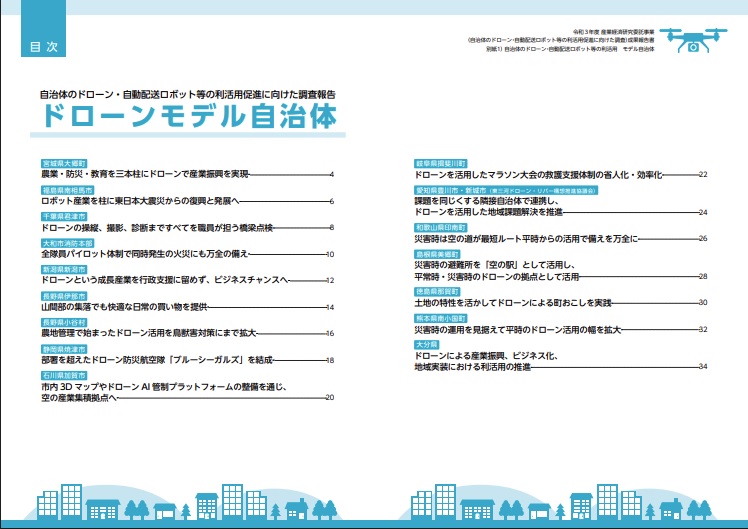
Under its national drone strategy, Japan lifted restrictions on Level 4 flights (beyond-visual-line-of-sight operations in populated areas without assistance) in 2022. This is accelerating applications in logistics, infrastructure monitoring, and emergency response.
- Key developments include:
Logistics:
Rakuten and ANA are testing medical and essential-goods delivery in mountainous regions.
Infrastructure:
NTT and Toyota are developing monitoring systems for bridges, dams, and other civil structures.
Agriculture:
Kubota offers precision agricultural services using autonomous drones. - Domestic drone ecosystem:
Japan aims to reduce dependence on Chinese-made drones and nurture domestic manufacturers. - Legal reform:
Aviation law revisions scheduled for 2024 will broaden designated drone operation zones and streamline approvals.
Japan is positioning drones not only as tools for efficiency but also as essential infrastructure for aging communities and disaster-prone regions.
Hong Kong: Building a “Low-Altitude Economy”
Hong Kong is adopting an aggressive stance toward low-altitude mobility. As part of its “low-altitude economy” initiative, the government is easing regulations and promoting commercial drone applications. In March 2024, the Transport and Logistics Bureau approved 38 pilot projects spanning logistics, inspection, monitoring, and surveying.
Key initiatives:
- Logistics pilots:
SF Express, JD.com and others are conducting delivery trials to remote islands such as Lamma Island and Cheung Chau. - Infrastructure inspection:
Drones are being deployed for high-rise structure checks and bridge inspections to enhance efficiency and safety. - Smart-city integration:
Hong Kong Science Park and government agencies are co-developing real-time urban monitoring systems using drone networks. - Future roadmap:
A comprehensive low-altitude management framework is expected by 2025, with full-scale implementation targeted for 2027.
Taiwan: Progressive Regulations and Emerging Business Models
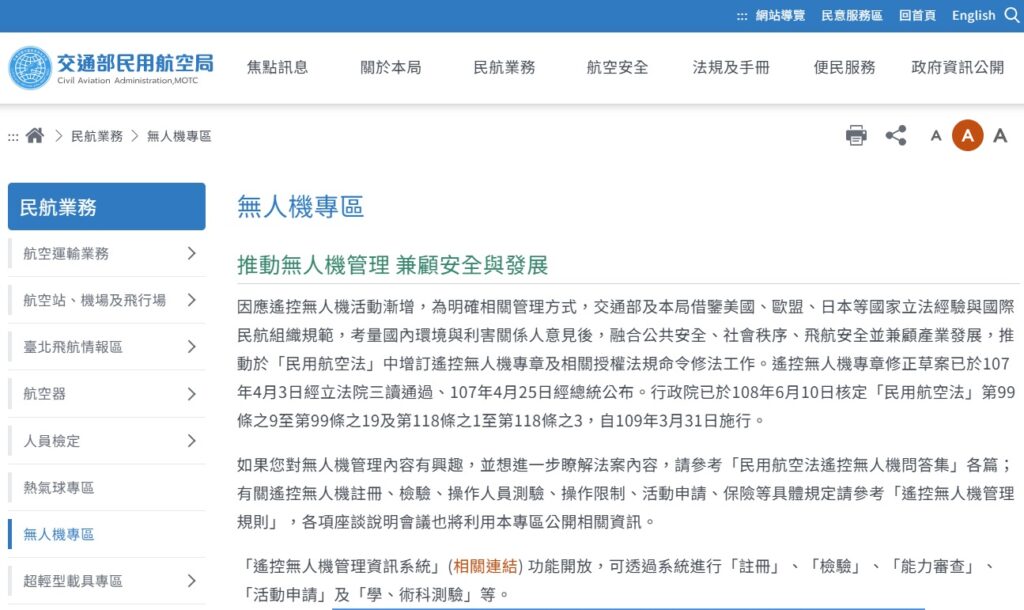
Taiwan is incorporating drones into its national smart-transportation strategy. It aims to establish a full low-altitude management system by 2025.
Key developments:
- Agriculture:
Pingtung County has widely adopted drones for pesticide spraying. - Drone delivery:
Taichung City is testing food-delivery drones, with significant market expansion projected by 2026. - Disaster response:
Drones play a crucial role in typhoon and earthquake relief operations—transporting supplies and assessing damage efficiently.
Backed by regulatory flexibility and an innovation-driven industrial base, Taiwan is emerging as a fertile ground for drone-based service models.
Growing Demand and Business Opportunities in Logistics
Drone logistics is developing differently in each region due to geography and infrastructure maturity.
Hong Kong
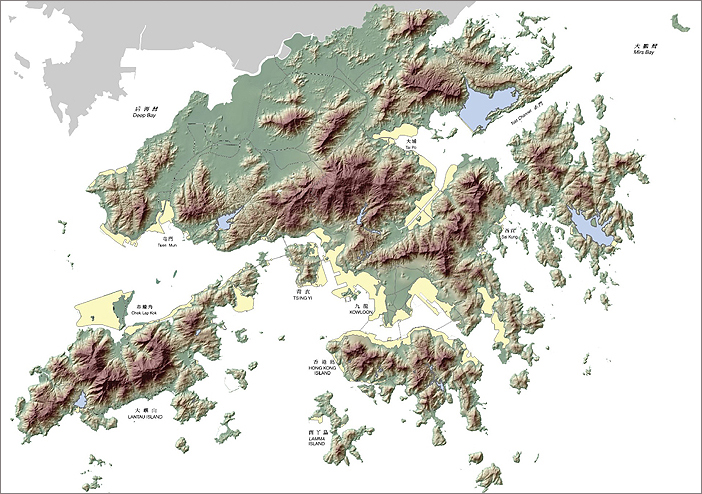
With numerous outlying islands and mountainous coastlines, Hong Kong offers a compelling environment for last-mile drone delivery. Trials show strong potential for overcoming traffic congestion and labor shortages, especially as e-commerce continues to grow.
Japan
Rural depopulation and an aging workforce are testing the sustainability of traditional logistics networks. Drones are poised to become essential for delivering pharmaceuticals, groceries, and daily necessities to remote communities.
Taiwan
Demand is rising rapidly for food and medical deliveries. With government backing, logistics operators are expanding trial programs and preparing for commercial rollout.
Geography and Operational Suitability
Hong Kong
Source: https://hkss.cedd.gov.hk/hkss/en/publications-and-resources/educational-materials/hong-kong-geology/chapter-9/index.html
Hong Kong’s dense high-rise urban core imposes strict flight restrictions. However, drone operations in island regions and mountainous areas are expanding, offering new transport solutions where ferry service is limited.
Japan
Source: https://www.jice.or.jp/knowledge/japan/commentary07
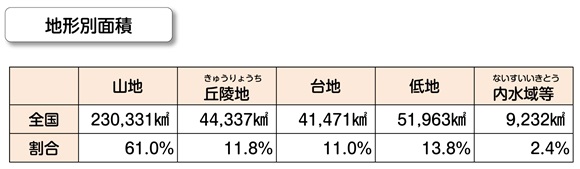
As a geographically diverse nation, drone adoption varies widely. Sparse rural areas and disaster-prone regions are leading use cases, with strong policy support driving infrastructure readiness.
Taiwan
Source: https://okke.app/words/p/y2oxiQ2TAspTf
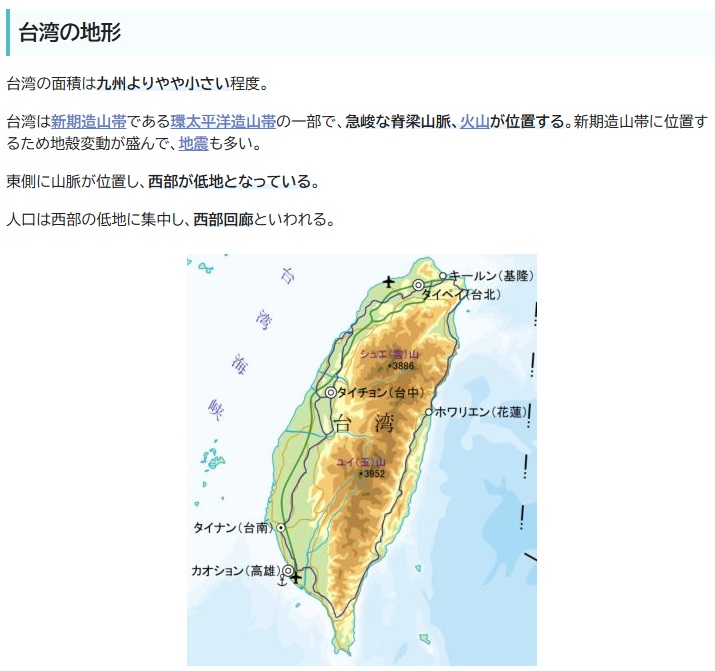
Mountainous terrain and frequent disasters make Taiwan well-suited for drone deployment in agriculture, emergency response, and infrastructure maintenance.
Market Outlook and Key Challenges
Japan
Japan’s drone market is on track to reach roughly JPY 500 billion by 2025, supported by strong public- and private-sector investment. Adoption is expanding most rapidly in rural regions, where labor shortages and demographic decline are accelerating the need for automation. As a country frequently affected by earthquakes, typhoons, and other natural disasters, Japan is also seeing fast-growing demand for drones in public-safety operations such as firefighting, policing, and search-and-rescue. In agriculture, smart-farming solutions—ranging from seeding and pesticide spraying to crop-monitoring—are gaining momentum, particularly in mountainous farming communities and large-scale agricultural sites where fully autonomous drones are increasingly being deployed. The 2022 approval of Level 4 flights (beyond-visual-line-of-sight operations in populated areas) marked a major regulatory milestone and is expected to pave the way for broader commercial applications in urban settings, including last-mile delivery and other logistics services.
Hong Kong
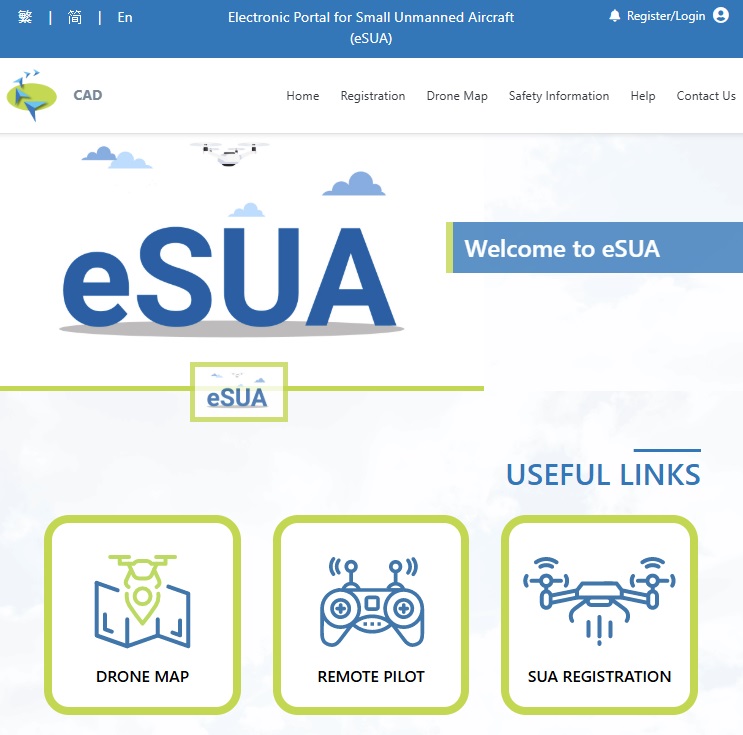
Hong Kong’s drone sector is poised for rapid expansion under the government’s low-altitude economy strategy, with the market projected to reach HKD 1 billion by 2028. As a dense, infrastructure-intensive metropolis, Hong Kong offers significant opportunities for drone applications in traffic monitoring, crowd management, and high-rise structural inspections. Although urban airspace remains tightly controlled, pilot programs for small-drone logistics and warehouse management continue to move forward, demonstrating growing commercial interest in the field. Nevertheless, all commercial drone operations require approval from the Civil Aviation Department (CAD), and the pace of regulatory refinement will be a critical determinant of future market growth.
Taiwan
Taiwan’s drone industry is developing quickly and is expected to reach several hundred billion TWD by 2026 as adoption accelerates across agriculture, emergency response, and high-tech manufacturing. In the semiconductor and advanced-manufacturing sectors, drones are increasingly used for facility surveillance, precision mapping, and equipment inspection—applications that demand high-accuracy imaging and sensing capabilities. Government subsidies and supportive policy frameworks are also driving broader uptake in both lowland and mountainous agricultural regions, particularly for pesticide spraying, irrigation management, and crop monitoring. At the same time, Taiwan’s exposure to typhoons, earthquakes, and broader geopolitical risks is prompting wider use of drones for national-land protection, river-system monitoring, and routine inspections of remote infrastructure.
Summary
The drone industry is entering a phase of large-scale commercialization, driven by rapid technological advances and proactive government policies. Hong Kong is pushing ahead with low-altitude economy initiatives and urban logistics, Japan is positioning drones as solutions to structural social challenges, and Taiwan is accelerating adoption across agriculture, disaster response, and industrial applications.
For companies and investors, opportunities span market entry, cross-border partnerships, M&A, and strategic investments—especially in specialized startups and emerging service models. Viewing drones as an essential layer of “aerial infrastructure” will be key to building long-term competitiveness.
Feel free to contact us
At MAY Planning, we provide advisory services on market characteristics, growth opportunities, and evolving drone-related regulations and policies across Japan, Hong Kong, Taiwan, and other markets. We also support M&A and investment sourcing in the drone sector, and help clients navigate government support programs, grants, and market entry strategies to accelerate successful expansion.
References:
1)Heena singh. (2025, February 25). Future Boom in the Drone Market: By BCC Research. BCC Research. https://blog.bccresearch.com/future-boom-in-the-drone-market-by-bcc-research
2)Global Drone Services Market Size Predicted to Surpass Around $555 Billion By 2034. (2025, March 20). GlobeNewswire. https://www.globenewswire.com/news-release/2025/03/20/3046270/0/en/Global-Drone-Services-Market-Size-Predicted-to-Surpass-Around-555-Billion-By-2034.html
3)Commercial Drone Market Size, Share, and Trends 2024 to 2034. (2024, August 29). Precedence Research. https://www.precedenceresearch.com/commercial-drone-market
4)KDDI、自動配送を30年実用化 ドローン・車を一体制御. (2024, December 6). 日本経済新聞. https://www.nikkei.com/article/DGXZQOUC04AM30U4A201C2000000/
5)ドローン物流の全貌を徹底解説!仕組み・活用方法・最新事例と未来展望. (2025, February 13). Aidiot. https://aidiot.jp/media/logistics/post-7867/
6)2025年のドローン物流革命:市場規模、技術革新、そして課題. (2024, September 20). Reinforz Insight. https://reinforz.co.jp/bizmedia/57943/
7)Regulatory Sandbox Pilot Projects Officially Launched to Foster Low-Altitude Economy and Innovative Industry Development (with Photos/Video). (2025, March 20). The Government of the Hong Kong Special Administrative Region Press Releases. https://www.info.gov.hk/gia/general/202503/20/P2025032000179.htm?fontSize=1
8)蕭通. (2025, March 21). 低空經濟|順豐豐翼無人機申3航線試點 為長洲南丫島派藥及快遞. 香港01. https://www.hk01.com/%E7%A4%BE%E6%9C%83%E6%96%B0%E8%81%9E/60221897/%E4%BD%8E%E7%A9%BA%E7%B6%93%E6%BF%9F-%E9%A0%86%E8%B1%90%E8%B1%90%E7%BF%BC%E7%84%A1%E4%BA%BA%E6%A9%9F%E7%94%B33%E8%88%AA%E7%B7%9A%E8%A9%A6%E9%BB%9E-%E7%82%BA%E9%95%B7%E6%B4%B2%E5%8D%97%E4%B8%AB%E5%B3%B6%E6%B4%BE%E8%97%A5%E5%8F%8A%E5%BF%AB%E9%81%9E
9)Simon chan. (2025, March 20). 低空經濟|美團 Keeta Drone 獲准在港試飛 低空物流啟動在即. Ezone. https://ezone.hk/article/2012869/%E4%BD%8E%E7%A9%BA%E7%B6%93%E6%BF%9F-%E7%BE%8E%E5%9C%98-keeta-drone-%E7%8D%B2%E5%87%86%E5%9C%A8%E6%B8%AF%E8%A9%A6%E9%A3%9B-%E4%BD%8E%E7%A9%BA%E7%89%A9%E6%B5%81%E5%95%9F%E5%8B%95%E5%9C%A8%E5%8D%B3
10)黃郁婷. (2022, September 19). 台灣無人機物流計畫啟動,未來如何發揮關鍵作用?【獨立特派員】. 公視新聞網. https://news.pts.org.tw/article/600515