
What Kind of Talent Will Support the Future of Tourism, Food Service, Retail, Manufacturing, and Services in the AI Era?
 kanri
kanriThe wave of technology is no longer limited to tech companies. AI is rapidly penetrating traditional industries such as tourism, food service, retail, services, and manufacturing, bringing significant changes to operational environments. What organizations now require is not merely technical skills, but people who can work alongside AI. This article explores the latest transformations across these industries, the emerging talent profiles supporting them, and the growing role played by professionals from Hong Kong, Singapore, and the broader ASEAN region.
Transformation of Traditional Industries and Changing Talent Demand in the AI Era
Advances in artificial intelligence are reshaping not only technology companies but also traditional sectors including tourism, hospitality, retail, services, and manufacturing. As these industries undergo transformation, the types of professionals they require are also evolving significantly.
This section focuses on key traditional industries currently integrating AI technologies, examining what kinds of talent will be needed in the future and how professionals from Hong Kong, Singapore, and ASEAN countries are contributing to these changes.
Tourism: Professionals Who Connect Data and Experience Value
As the tourism industry recovers from the pandemic, it is adopting AI technologies at an unprecedented pace. AI is being used for predicting traveler behavior, optimizing hotel pricing, and generating personalized travel recommendations, all of which enhance the sophistication of tourism services. The role of AI extends beyond operational efficiency; it is transforming the very quality of the travel experience itself.
In this environment, the industry increasingly demands talent who can combine digital literacy with hospitality skills. Examples include “smart travel planners,” who customize travel proposals based on AI-generated itineraries, and “tourism data coordinators,” who translate analytical insights into practical service improvements on the ground. Destination operators and Destination Management Organizations (DMOs) are also expected to utilize AI-driven demand forecasts—broken down by region and time—to manage visitor distribution and optimize reception capacity.
In tourism, the most important capability for future professionals will be the ability to combine hospitality mindset with a solid understanding of AI technologies.
Multilingual and multicultural capabilities also remain critical. Talent from multilingual environments such as Singapore and Hong Kong often demonstrate strong advantages when handling international tourists and executing global marketing initiatives.
Food Service: From Operational Management to Customer Experience
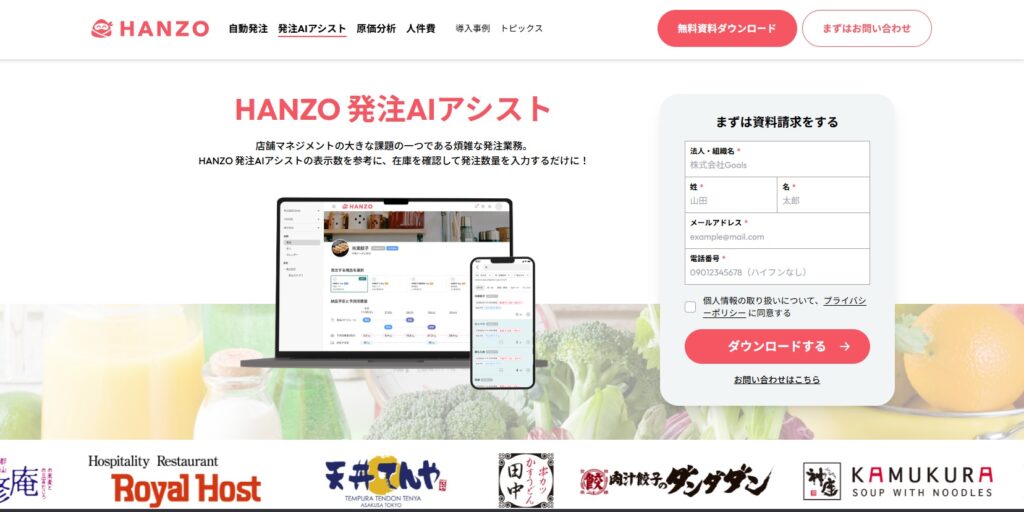
The restaurant industry is also undergoing substantial transformation as AI technologies become integrated into daily operations. Tasks traditionally dependent on experience—such as food preparation planning, inventory control, pricing, and customer acquisition—are increasingly being visualized and automated through AI systems. The industry is gradually shifting from intuition-based management toward data-driven optimization.
In smart restaurant environments, AI demand forecasting tools are used to manage purchasing and staffing schedules. Order data is analyzed to optimize menus, while voice recognition systems enable automated ordering. AI is also used to analyze customer preferences and purchase histories to support personalized promotions through recommendation systems.
These developments are reshaping the skills required in the industry. Beyond kitchen or service expertise, new roles are emerging, such as “food-tech specialists” who combine culinary knowledge with digital technology, and “dining experience designers” who scientifically design customer experiences. In addition, roles like “store digital managers,” responsible for integrating applications and IoT devices into restaurant operations, are becoming increasingly important.
Young professionals from Hong Kong and Singapore are becoming particularly active in these fields. In Singapore, government support programs encourage entrepreneurs with both technical and management training to launch startups in food-tech and related industries.
Looking ahead, the food service sector will increasingly depend on multi-skilled professionals who understand the intersection of food, technology, and customer experience. Demand for international students and multilingual talent from ASEAN countries is also expected to rise.
Retail: Hybrid Professionals Connecting Physical and Digital Retail
In the retail sector, the rise of e-commerce has led to a fundamental redefinition of the role of physical stores. Retail spaces are evolving from simple points of sale into hubs for brand experiences and community building. Supporting this shift is a new type of professional: hybrid talent who understands both AI technologies and physical retail operations.
AI enhances operational efficiency through inventory management, pricing optimization, and demand forecasting. At the same time, it analyzes customer purchase data and behavioral histories to enable personalized service and marketing strategies.
Recent developments in “smart retail” include AI analysis of in-store customer movement to optimize product placement and promotional strategies. AI chatbots for customer service, facial recognition-based membership systems, and recommendation-driven sales proposals are also becoming common.
In such an environment, retailers increasingly require employees who excel at customer interaction while also possessing digital and analytical knowledge. Examples include “store data utilization leaders,” who analyze customer data while improving store strategies, and “customer experience (CX) coordinators,” who implement omnichannel strategies at the operational level.
Retail professionals from Hong Kong and Singapore often match this hybrid talent profile. In Hong Kong, initiatives such as AI-powered unmanned retail stores at the airport and collaborations between tech startups and department stores are accelerating AI adoption. Digitally literate retail staff are contributing to new forms of value creation. In Singapore, the government’s Retail Industry Digital Plan supports small and medium retailers in adopting AI technologies and offers training programs to develop related skills.
Service Industries: Value Creation Through Human–AI Collaboration
Service industries rely heavily on the quality of customer interactions, making them sectors where AI must coexist closely with human judgment. In fields such as hospitality, call centers, and customer support, chatbots and automated response systems increasingly handle initial inquiries. However, complex issues and complaint resolution still require human empathy and decision-making.
Professionals who thrive in this environment are those with strong emotional intelligence and the ability to collaborate effectively with AI. These individuals understand which tasks can be handled by AI and which require human intervention, and they can flexibly divide responsibilities between the two.
They also serve as “interface professionals” who interpret AI-generated outputs and translate them into appropriate actions. For example, customer service operators may adjust their responses using real-time AI analysis of phone conversations, while reception staff in salons or clinics may optimize waiting times by coordinating with AI-based reservation systems.
The next generation of service professionals will therefore not be individuals replaced by AI, but those who co-create value with it.
Service professionals from Hong Kong and Singapore possess strong multilingual capabilities and cultural adaptability, making them well suited to AI-enabled international service environments. In Hong Kong’s hotel industry, hybrid hospitality models combining AI translation tools with human service are already becoming common. In Singapore, AI systems are introduced in public service counters while human staff provide follow-up support to maintain high levels of citizen satisfaction.
Manufacturing: Tech Operators in the Smart Factory Era
Manufacturing has long been associated with automation and labor efficiency, but recent developments are pushing the sector further toward “smart factories,” where AI, IoT, and robotics work together to enable more advanced production management and quality control.
Even small and medium-sized manufacturers are adopting affordable cloud-based AI tools, which is transforming the type of workforce required in factories.
Rather than traditional line workers, companies increasingly seek “tech operators” capable of monitoring AI-controlled machines and sensors, detecting anomalies, and responding appropriately. Another emerging role is the “smart production coordinator,” who proposes operational improvements by combining production knowledge with data analysis.
In areas such as equipment maintenance and safety management, professionals capable of implementing predictive maintenance systems powered by AI are also in high demand.
Future manufacturing will continue to value professionals who combine technological expertise with hands-on operational understanding. These individuals serve as bridges between digital systems and real-world production environments.
In Hong Kong, although traditional manufacturing has declined, collaboration within the Guangdong–Hong Kong–Macao Greater Bay Area is promoting exchanges of high-tech manufacturing talent. Universities such as Hong Kong Polytechnic University and City University of Hong Kong are strengthening programs that integrate manufacturing with AI, combining academic training with industry internships.
Singapore, meanwhile, is accelerating AI adoption in sectors such as precision engineering, biopharmaceuticals, and food processing under its Industry 4.0 policy framework. Government agencies, corporations, and educational institutions are working together to cultivate professionals capable of operating smart factories.
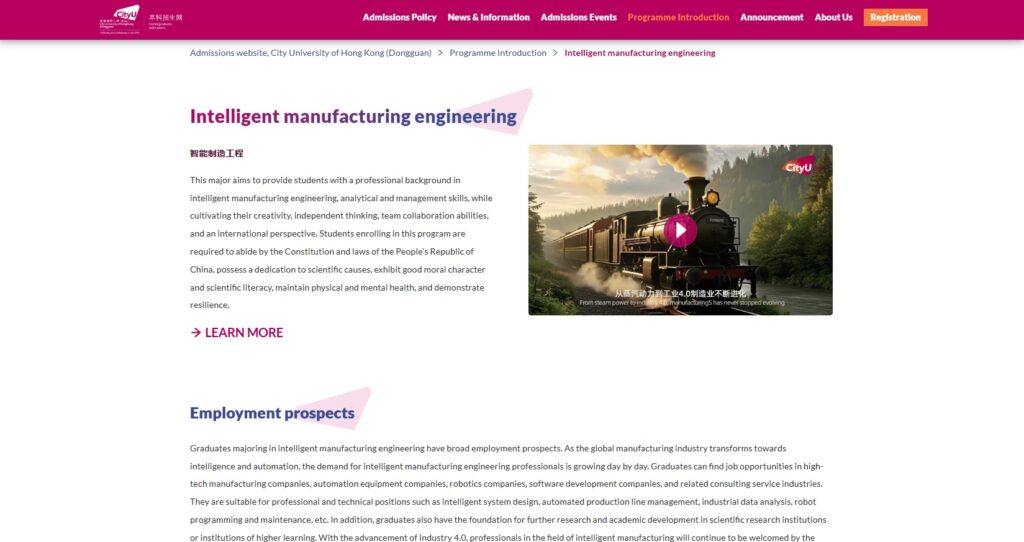
Source: https://uga.cityu-dg.edu.cn/en/Intelligent-manufacturing-engineering
Essential Skills and Mindsets for the AI Era
As AI technologies continue to advance rapidly, businesses—especially those in traditional industries—must reconsider what skills and mindsets will be required in the future workplace. Research findings and practical case studies highlight several capabilities that are becoming universally important across industries.
Technological Literacy and AI Collaboration Skills
Research conducted by the consulting firm Deloitte in 2024 suggests that the major challenge companies face when implementing AI is not simply a shortage of AI engineers, but rather a lack of non-technical professionals who can work effectively with AI systems.
Employees increasingly need both technological literacy and the ability to collaborate with AI tools in their daily work. Reports by researchers such as Justin Underhill also emphasize that non-engineers should develop capabilities including:
- Understanding the basic mechanisms and limitations of AI
- Interpreting AI-generated data outputs
- Applying AI recommendations within operational contexts
- Maintaining ethical judgment and accountability
In many traditional industries, the ability to use AI effectively at the operational level is becoming a key factor influencing service quality.
Emotional Intelligence and Human-Centered Value
As AI takes over routine tasks, uniquely human capabilities—particularly emotional intelligence—are gaining renewed importance.
Industries such as tourism, services, and retail rely heavily on human interaction. Skills such as empathy, attentiveness, and trust-building therefore become even more valuable. Important competencies include:
- Recognizing subtle changes in customer emotions and responding appropriately
- Demonstrating empathy to rebuild trust during service failures
- Creating memorable customer experiences through storytelling
These abilities represent aspects of human warmth that cannot be replaced by AI and will remain central to talent strategies in the future.
Transferable Skills and Lifelong Learning
According to technology education advocates, one of the most important capabilities in the AI era is the development of transferable skills—skills that remain valuable across industries and job functions.
Examples include:
- Problem identification and structured analysis
- Logical decision-making and hypothesis testing
- Collaboration across diverse teams
- Flexible communication skills
Research from educational institutions such as FutureLearn also highlights that the ability to continue learning—through continuous upskilling and reskilling—will determine both individual and organizational competitiveness in the coming decades.
Implementation Capability and Process Improvement Mindset
Another key characteristic of valuable professionals in the AI era is the ability to implement ideas in real operational environments rather than simply conceptualizing them.
In sectors such as manufacturing, retail, and food service—where AI tools are introduced for predictive maintenance, recommendation systems, or hygiene monitoring—successful implementation requires several competencies:
- Collaboration and negotiation with AI vendors
- Customization of AI tools to fit operational workflows
- Continuous improvement through PDCA cycles (Plan, Do, Check, Act)
To effectively use AI as a tool, professionals must deeply understand operational processes and identify inefficiencies or bottlenecks that technology can address.
Cross-Cultural Understanding and Diversity Management
In an increasingly global business environment, cross-cultural understanding and diversity management are becoming as important as AI capabilities.
Professionals raised in multicultural societies such as Singapore, Hong Kong, and many ASEAN countries often demonstrate strong adaptability and communication flexibility. These traits make them valuable contributors to multinational teams and global business operations.
For organizations seeking to collaborate with such international talent, it is important to strengthen capabilities such as:
- Multilingual communication, including English
- Fair evaluation systems and unbiased feedback structures
- Psychological safety within multicultural workplaces
Building such environments not only facilitates international collaboration but also enhances organizational creativity and innovation.
As outlined above, the essential skills required in the AI era extend far beyond basic digital literacy or programming abilities. They represent a redefinition of uniquely human capabilities—such as emotional intelligence, cross-cultural understanding, the ability to implement ideas in practice, and adaptability to change.
Summary
In the AI era, change itself has become the constant. Traditional industries must therefore redefine the types of professionals they rely on.
Talent capable of co-creating with AI, implementing transformation at the operational level, and adapting to multicultural environments will become key drivers of competitiveness. This shift represents not merely digital transformation but a broader reconstruction of human resource strategies that leverage uniquely human strengths—creativity, adaptability, and collaboration.
For Japanese companies, collaboration with talent from Hong Kong, Singapore, and ASEAN countries presents a valuable opportunity to accelerate practical AI adoption and industry transformation.
Feel free to contact us
At MAY Planning, we provide advisory services on defining the requirements for AI-collaborative talent and developing recruitment strategies. We also support companies in redesigning business processes associated with AI implementation, as well as in formulating and matching strategies for utilizing overseas talent from Hong Kong, Singapore, and the broader ASEAN region.
References:
1)Justin Underhill. (2024, October 3). The Future of Jobs in the AI Era: What Skills Will Be Indispensable? Linkedin. https://www.linkedin.com/pulse/future-jobs-ai-era-what-skills-indispensable-justin-underhill-ppm–ujeqc/
2)Queen elizabeth edwards. (2025, April 24). Transferable Skills in the AI Era: How Your Expertise Remains Valuable. Linkedin. https://www.linkedin.com/pulse/transferable-skills-ai-era-how-your-expertise-remains-edwards-dv4gf/
3)Lina kramer. (n.d.). How Is AI Influencing Job Roles and Skill Requirements? Future Learn. https://www.futurelearn.com/info/courses/ai-in-education/0/steps/389485
4)Thomas hurd. (2024). THE STATE OF AI TALENT 2024. Zeki. https://atlastecnologico.com/wp-content/uploads/2024/06/Zeki-State-of-AI-Talent-Report-FINAL-comp.pdf
5)Franklin carpenter. (2023, August 22). Preparing Tourism for an AI-Enabled Future: Building Workforce Capacity and Trust for the Tourism Industry. Linkedin. https://www.linkedin.com/pulse/preparing-tourism-ai-enabled-future-building-capacity-carpenter/
6)Zangador institute. (2023, July 10). Robots, AI and the Skills Requirements of Tourism and Hospitality Employees. PANTOUR. https://nexttourismgeneration.eu/robots-ai-and-the-skills-requirements-of-tourism-and-hospitality-employees/
7)Halil aksu. (2024, July 9). AI Transformation Chronicles: AI in Tourism Industry. Digitopia. https://digitopia.co/blog/ai-in-tourism/
8)Food for Thought: AI in Food Industry Talent Trends. (2025, April 11). Brunel. https://www.brunel.net/en-us/blog/life-sciences/food-for-thought-ai-in-food-industry-talent-trends
9)World Talent Ranking 2024. (n.d.). IMD – International Institute for Management Development. https://www.imd.org/centers/wcc/world-competitiveness-center/rankings/world-talent-ranking/
10)Human Resources. (n.d.). Innovation, Technology and Industry Bureau. https://www.itib.gov.hk/en/i_and_t_support/human_resources.html
11)Architects of Singapore’s Digital Future. (n.d.). Infocomm Media Development Authority. https://www.imda.gov.sg/
12)Hong Kong’s First AI-Driven Unmanned Store Is Here! (2025, January 24). Cloudpick. https://www.cloudpick.ai/company/news/data_168.html
13)AI bridges the gap between Singapore’s retailers and omnichannel shoppers. (n.d.). Infocomm Media Development Authority. https://www.imda.gov.sg/resources/blog/blog-articles/2025/03/ai-bridges-gap-between-sg-retailers-and-omnichannel-shoppers
14)A Guide to Incentives and Government Grants for F&B Businesses in Singapore. (2023, March 23). StaffAny. https://www.staffany.com/blog/government-grants-for-fb/