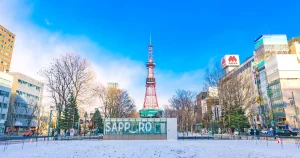
Sapporo City: Japan’s Northern Innovation Hub for Sustainable Growth and Global Expansion
 kanri
kanriSapporo City, the capital of Hokkaido, is quietly redefining its role in Japan’s economic landscape. Long associated with livability, food culture, and tourism, Sapporo is now emerging as a strategic business and innovation base for companies seeking long-term scalability, cost efficiency, and access to future-oriented industries.
As Japan accelerates regional decentralization and industrial diversification, Sapporo stands out for its balanced combination of urban functionality, advanced research capacity, and room for growth. This article explores why Sapporo is gaining attention among overseas companies and investors, and how its industrial vision positions it as a compelling destination for the next phase of global expansion.
Sapporo’s Strategic Position in Japan’s Economic Geography
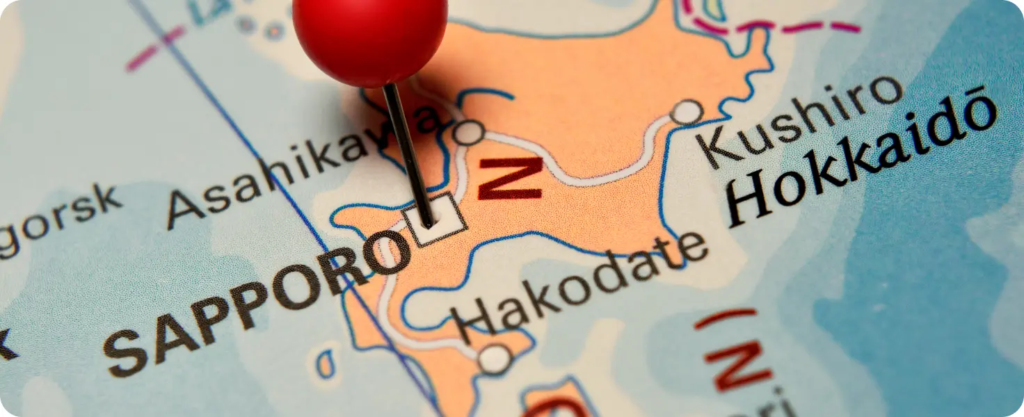
Sapporo occupies a unique place in Japan. As the political, economic, and academic center of Hokkaido, it functions as both a regional capital and a national strategic node.
Unlike Japan’s traditional metropolitan centers, Sapporo offers:
- Scale without congestion
- Urban infrastructure without extreme cost pressure
- Policy focus without excessive competition for space and talent
For companies reassessing concentration risk in Tokyo or seeking a complementary base within Japan, Sapporo provides a credible alternative for medium- to long-term operations.
Its position also supports Japan’s broader goals of regional revitalization, industrial resilience, and innovation decentralization — making Sapporo a city where local and national strategies are unusually well aligned.
Access, Connectivity, and International Reach
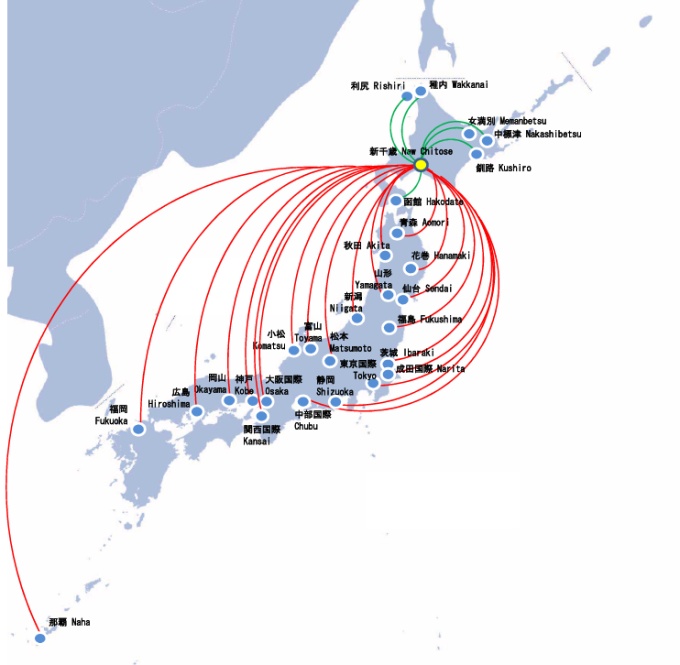
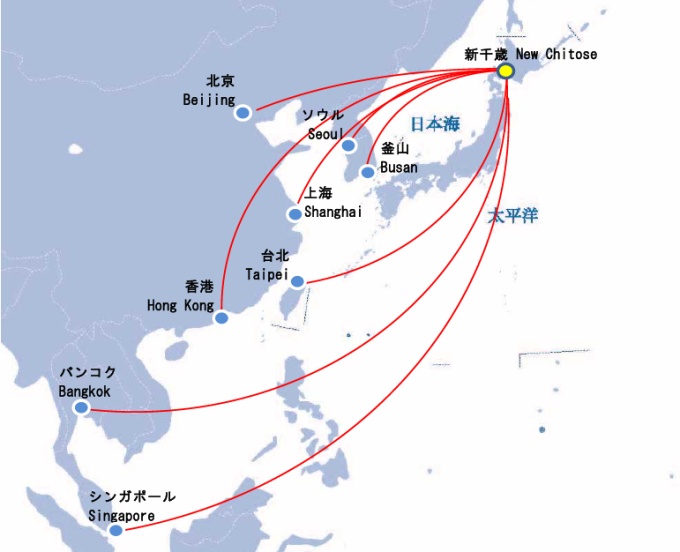
Despite its northern location, Sapporo is highly accessible.
New Chitose Airport serves as one of Japan’s major aviation hubs, offering:
- Frequent domestic connections to Tokyo, Osaka, and major cities
- Direct international routes across Asia
- Efficient access between the airport and the city center
This connectivity allows companies to maintain seamless links with headquarters, clients, and regional markets, while operating in a less congested and more scalable environment.
For overseas firms, this means Sapporo can function not only as a local base, but also as part of a broader Asia-Pacific operational network.
Quality of Life as a Business Advantage
In Sapporo, quality of life is not a soft factor — it is a strategic asset.
The city offers:
- Short commuting times and a compact urban layout
- Abundant green spaces and clear seasonal rhythms
- A cost of living significantly lower than Japan’s largest metropolitan areas
These conditions support talent attraction and long-term retention, particularly for highly skilled professionals in technology, research, and creative fields.
For companies facing global competition for human capital, Sapporo’s living environment reduces burnout, improves work-life balance, and supports sustainable workforce development.
Cost Competitiveness and Resource Availability
Sapporo’s cost structure is increasingly attractive in a global context.
Key advantages include:
- Competitive office and facility rents
- Lower housing and labor costs relative to Tokyo and Yokohama
- Availability of large sites suitable for R&D centers, data-related facilities, and scalable operations
In addition, Hokkaido’s abundant natural resources — including land, water, and renewable energy potential — provide a foundation for industries that require long-term operational stability.
This combination allows companies to plan expansion strategies without the spatial and financial constraints common in high-density urban centers.
Core Strategic Industry: IT, AI, and Digital Technologies
Digital technology forms the backbone of Sapporo’s future growth strategy.
The city has developed a strong ecosystem encompassing:
- Software development and system integration
- AI, data analytics, and robotics
- Digital services supporting finance, healthcare, tourism, and manufacturing
Universities, research institutions, and private firms collaborate closely, creating a steady pipeline of technical talent.
Sapporo is particularly well suited for:
- Offshore and nearshore development centers
- AI experimentation in real-world urban environments
- Long-term product and platform development
For companies seeking stable, scalable digital operations, Sapporo offers technical depth without metropolitan volatility.
Semiconductors and Advanced Manufacturing Support Functions
The semiconductor sector represents one of the most transformative shifts in Hokkaido’s economy — and Sapporo plays a central supporting role.
Rather than positioning itself purely as a manufacturing site, Sapporo focuses on:
- R&D and design functions
- Supply chain coordination
- Human resource development and training
Its proximity to new semiconductor investments across Hokkaido allows Sapporo to act as a knowledge and management hub, supporting high-value functions that complement production sites elsewhere.
For overseas semiconductor and advanced manufacturing firms, this structure enables a capital-efficient entry point into Japan’s evolving semiconductor ecosystem.
Environment and Energy: A Platform for Sustainable Innovation
Sapporo’s geographic and climatic conditions make it an ideal testing ground for environmental and energy technologies.
The city actively promotes:
- Renewable energy utilization
- Smart energy systems
- Low-carbon urban infrastructure
Unlike dense metropolitan areas, Sapporo allows companies to conduct real-world demonstrations and long-term pilot projects at meaningful scale.
For global firms developing sustainability solutions, Sapporo offers both technical feasibility and policy alignment, accelerating the path from concept to commercialization.
Biotechnology and Life Sciences
Sapporo has built a biotechnology ecosystem grounded in:
- Medical and life science research
- Agricultural and food-related biotechnology
- Collaboration between universities, hospitals, and private enterprises
The city emphasizes applied research and commercialization, making it well suited for:
- Proof-of-concept development
- Clinical and field testing
- Scaling of biotech ventures
Lower operating costs and access to interdisciplinary partners allow companies to pursue longer research horizons than would be feasible in more expensive cities.
Food, Agriculture, and Tourism as Innovation Industries
In Sapporo, food and tourism are not legacy sectors — they are innovation platforms.
Food Innovation
Leveraging Hokkaido’s agricultural strength, Sapporo supports:
- Value-added food processing
- Food safety and quality innovation
- Export-oriented food branding and technology
Tourism and Experience Economy
Tourism increasingly integrates:
- Digital platforms
- Entertainment and creative content
- Sustainable and experiential models
This convergence creates opportunities for companies operating at the intersection of technology, culture, and consumer experience.
Creative Industries: Arts, Entertainment, and Digital Content
Sapporo actively nurtures creative industries as drivers of urban vitality and global visibility.
Supported sectors include:
- Game development and digital content
- Media, design, and entertainment
- Cross-sector collaboration between technology and creativity
Lower costs and a supportive ecosystem allow creators and companies to focus on long-term content development, rather than short-term survival.
Sapporo’s Role Among Japan’s Regional Cities
Among Japan’s regional cities, Sapporo stands out for its:
- Urban scale and functional completeness
- Concentration of academic and technical talent
- Clear, long-term industrial vision
Rather than competing directly with Tokyo or Osaka, Sapporo complements them by offering space, resilience, and experimentation capacity.
For overseas companies seeking more than a symbolic Japan presence, Sapporo provides a strategically credible and future-oriented base.
Summary
Sapporo City represents a new generation of Japanese business destinations — defined not by density alone, but by sustainability, talent stability, and long-term strategic alignment.
Through focused industry development, cost competitiveness, and a high quality of life, Sapporo is positioning itself as a northern innovation hub capable of supporting global companies across digital technology, life sciences, energy, food, and creative industries.
As Japan’s economic geography continues to evolve, Sapporo is no longer peripheral. It is becoming an essential node in Japan’s next phase of growth and global engagement.
Feel free to contact us
MAY Planning provides advisory services on Japan market entry and regional expansion strategy, including location selection, industry suitability assessment, and cost-structure analysis. We also offer support on R&D and innovation base planning, talent strategy and executive relocation consulting, and long-term operational resilience and business continuity design.
References:
1)(N.d.). Invest Sapporo – Set up to Sapporo. https://sapporo-step.global/