
The Business Power of “Oshi Activities” and Collaborations, Seen Through the “Chiikawa Economic Ecosystem”
 kanri
kanri“Oshi activities” that deliver everyday emotional comfort—and cross-industry collaborations that tap into fan psychology—are increasingly driving significant growth in sales and foot traffic. One of the most prominent examples is “Chiikawa”, the beloved character created by Nagano, which has partnered with a wide range of industries and attracted so much attention that it has given rise to what is now called the “Chiikawa economic ecosystem.”
In this article, we use Chiikawa as a case study to explore the business potential of oshi activities and collaborations, examining their success factors, challenges, and how companies can build sustainable marketing strategies around them.
What Are “Oshi Activities”?
“Oshi activities” refer to the actions individuals take to actively support and enjoy a specific artist, character, sports team, or even a corporate brand they feel emotionally attached to. These activities range from attending live events and purchasing related merchandise to sharing content on social media. With the advancement of digital technology, the scope of these activities has expanded significantly, amplifying individual consumption behavior.
In English, the term “fandom” is often used to describe fan communities, but it typically refers to a broader cultural or collective phenomenon centered on a particular work or theme. By contrast, “oshi activities” are more personal and emotionally driven, reflecting a uniquely Japanese cultural sensibility. While both share the same core purpose—supporting something one loves—“fandom” emphasizes the community, whereas “oshi activities” focus more on individual emotions and actions.
Successful Oshi Collaboration Case Study: Chiikawa
Driving Purchase Intent and Brand Engagement in the Food Service Industry
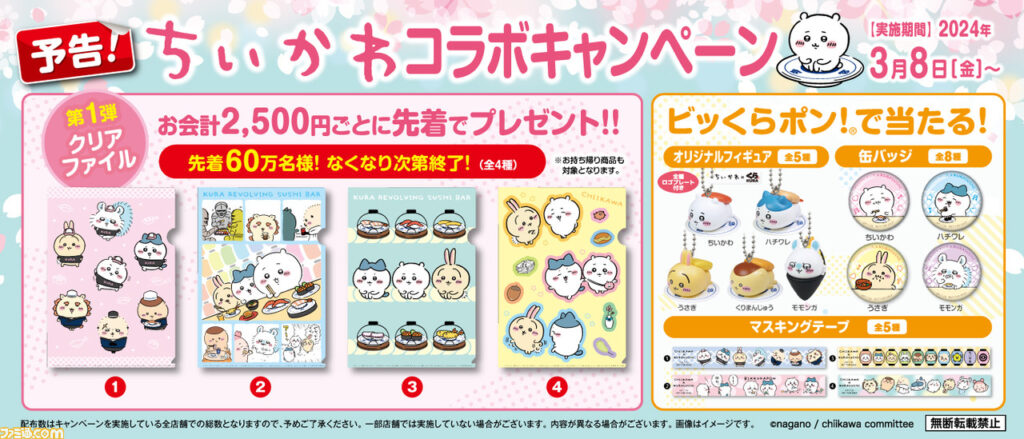
Kura Sushi (2024 Collaboration)
Kura Sushi launched a Chiikawa collaboration built around the original manga’s sushi-themed episodes, releasing limited-edition figurines in three phases. The campaign delivered immediate results: same-store sales in March 2024 rose 23% year-on-year, customer traffic increased by 9.5%, and average spend per customer grew by 12.3%, marking the company’s strongest monthly growth of the fiscal year.
Even after the campaign ended, sales remained above 105% year-on-year and 108% compared to pre-pandemic 2019 levels. Repeat visit rates rose by 19 points compared to standard campaigns. This sustained performance reflects how Chiikawa’s “everyday comfort” resonates deeply with fans, building long-term brand loyalty. However, product shortages led to customer frustration, highlighting the need for more accurate inventory control and demand forecasting.
McDonald’s Japan (2025 Happy Set)
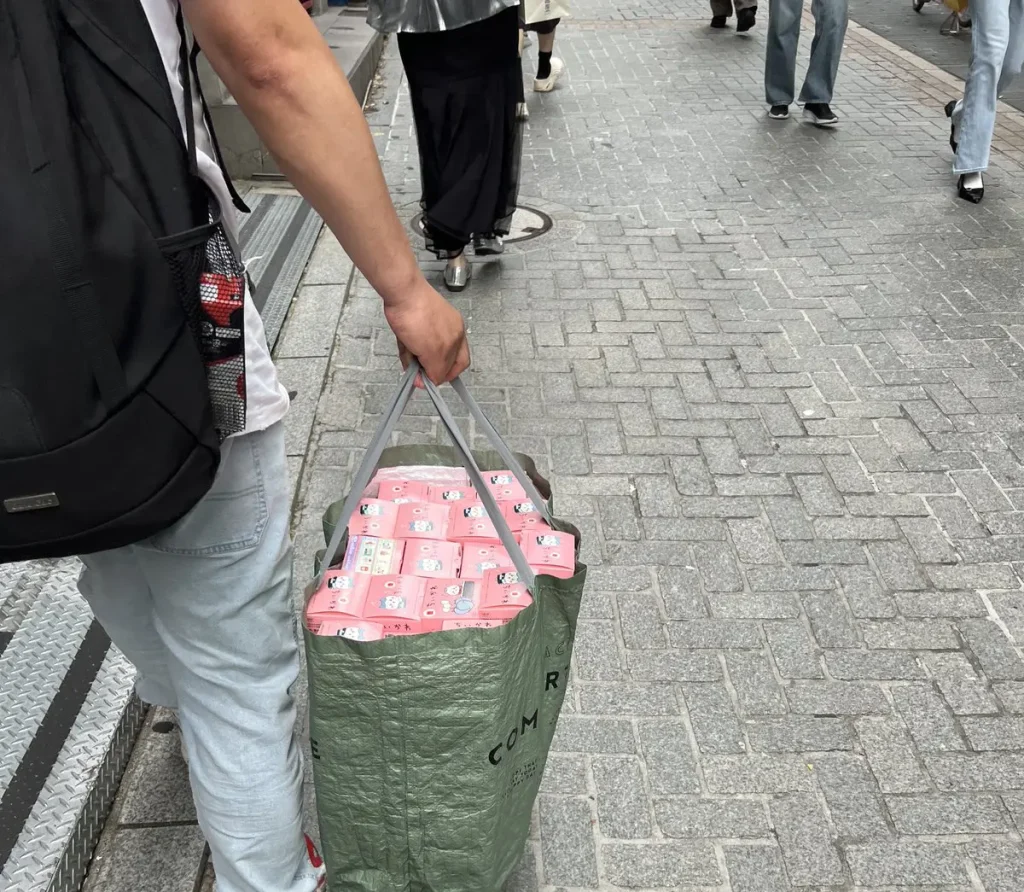
In 2025, McDonald’s Japan introduced Chiikawa-themed Happy Sets, which immediately drew long lines at stores. However, bulk purchases for resale purposes caused significant food waste, with some locations discarding hundreds of burgers and an overall waste rate of 15% for the collaboration.
In China, resale prices surged to five times retail, leaving children unable to obtain the toys and prompting complaints from parents. This case illustrates the challenge of balancing explosive fan demand with food waste reduction and ESG commitments. Measures such as pre-order systems and purchase limits are becoming increasingly necessary.
Strengthening Brand Value in Retail and Service Industries
Oshi collaborations are particularly effective in attracting specific fan segments to retail and service locations while enhancing brand recognition and favorability. Chiikawa collaborations have produced notable results across sectors:
- Department Stores (Marui, PARCO)
Limited-time pop-up shops and themed decorations drove foot traffic to 2.4 times that of typical events. Notably, women in their 40s accounted for 27% of visitors—an unusually high share—helping department stores expand beyond younger demographics and tap into new customer segments. - Daily Goods (Don Quijote, Lawson)
Chiikawa collaboration items such as chopstick-equipped onigiri recorded sales 3.7 times higher than standard products. By combining practicality with fandom, these products met fans’ desire to “bring their oshi into everyday life,” directly stimulating purchase behavior. - Financial Services (EPOS Card)
A Chiikawa-themed credit card inspired by the character’s “Shopping Certification Level 1” resonated strongly with fans, tripling new applications year-on-year. Usage among women in their 20s rose from 58% to 73%, significantly strengthening engagement with younger consumers.
Across these collaborations, brand favorability among women aged 20–40 (who make up 68% of the fan base) increased by an average of 22 points. At the same time, extreme resale premiums—such as mascots reselling at over 1,600% of list price—pose reputational and customer satisfaction risks, underscoring the need for stronger anti-resale measures.
Revitalizing Local Economies Through Tourism
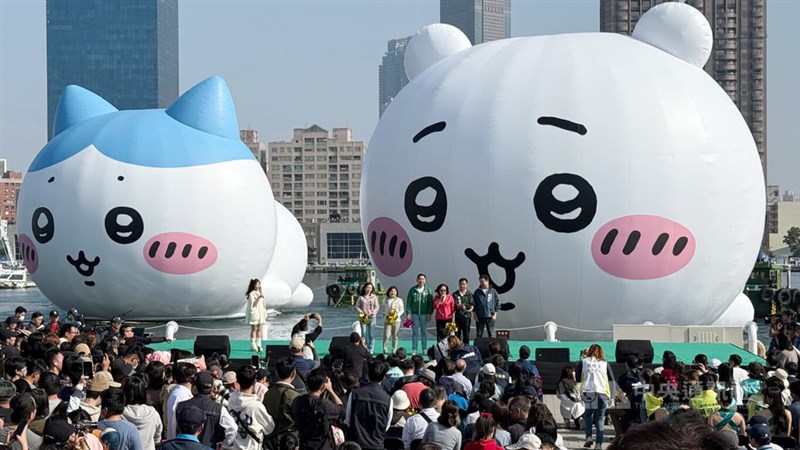
Oshi collaborations can also generate powerful regional economic effects. A standout example is the “Winter Amusement Park” held in Kaohsiung, Taiwan, in 2024. Featuring a 15-meter floating Chiikawa balloon, wrapped public transportation, and synchronized audio experiences, the event attracted 6 million visitors over 23 days.
The total economic impact reached approximately 46.3 billion JPY (approximately 295 million USD), with hotel occupancy exceeding 80%. Restaurants in the Love River Bay area saw sales rise by 35%, while nearby retailers and transportation operators also benefited. At the same time, a rise in counterfeit goods highlighted the urgency of strengthening IP protection to ensure sustainable regional development.
Global Expansion: Blending Digital Platforms and Cultural Appeal
Chiikawa’s global rollout illustrates how oshi culture is spreading internationally.
- China
Chiikawa merchandise sales exceeded 220 million JPY (approximately 1.40 million USD) in a short period. On Mercari’s cross-border platform, Chiikawa ranked second only to Pokémon, surpassing One Piece and Dragon Ball, while East Asia sales growth reached 1,590% year-on-year. This demonstrates how quickly oshi culture is taking hold across Asian markets. - North America
Through anime conventions and digital sticker packs, engagement among Gen Z and Millennials reached levels comparable to Japan. Digital-first oshi activities—such as exclusive emojis and virtual meetups—accelerated online sales and organic social media sharing.
Consumer Behavior Characteristics of Oshi Fans
Analysis of Chiikawa fans reveals key drivers behind successful collaborations.
- Demographics
Fans in their 20s and 30s account for 45% of the base, with women aged 20–40 forming the core 68%. Peak activity occurs on weekdays from 7:00–11:00 p.m. and late Saturday nights, making these windows especially effective for marketing campaigns. - Spending Patterns
Fans spend an average of 5,800 JPY (approximately 37 USD) per month on events and merchandise, 4,200 JPY (approximately 27 USD) on manga, and 3,500 JPY (approximately 22 USD) on game purchases. During collaboration periods, they buy an average of 3.2 items per person, with 64% citing the desire to “feel my oshi in everyday life” as the main motivation. - Social Media Engagement
Hashtags such as #GUChiikawa generated 120,000 posts, reached 2 million users, and achieved an engagement rate of 8.7%. TikTok videos under “Chiikawa food” surpassed 320 million views, while LINE stickers reached 12 million downloads. These figures suggest fan-driven content can reduce advertising costs by up to 30%.
These data indicate that oshi fans are seeking both everyday emotional comfort and a sense of belonging to a community, and that they demonstrate strong brand loyalty. Companies can leverage these insights to develop co-creation–driven marketing strategies that actively involve fans.
Expert Insights: Why Oshi Collaborations Succeed
Industry experts point to several critical success factors.
- SPRIALCUTE’s Yoichi Kawakami
Chiikawa’s success to “creator-first” licensing that preserves Nagano’s originality. Fan-participation initiatives run at more than twice the rate of other IPs, with 18% of product ideas sourced directly from social media feedback. This shows co-creation with fans plays a direct role in enhancing brand value. - Gray Parka’s Yuki Tsuji
LINE sticker downloads reached 12 million, placing them among the top performers in the industry. User-generated content (UGC) reduced advertising costs by 30%, while user-created videos related to #GUChiikawa achieved 1.8 times the engagement of official advertisements. This organic, fan-driven spread significantly improves marketing efficiency. - Professor Kobayashi of Waseda University
Chiikawa is a symbol of “emotional capitalism among digital natives,” noting that 83% of successful cases combine character vulnerability with product practicality. A clear example is Lawson’s chopstick-equipped onigiri, which recorded sales 3.7 times higher than standard products. - Kura Sushi’s marketing lead
At Kura Sushi, alignment with the original manga’s sushi-themed episodes helped drive campaign success. The three-phase release strategy increased repeat visit rates by 19 points. However, declines in customer satisfaction due to inventory shortages were partly attributed to insufficient adoption of AI-based demand forecasting tools. - Nikkei Cross Trend 2025
Chiikawa fans’ “empathy-driven purchasing” achieved a loyalty rate 1.5 times higher than that of other IPs. Marui’s pop-up stores saw foot traffic rise to 2.4 times normal levels, further validating the strong economic impact of oshi collaborations.
Taken together, these insights show that oshi collaborations rely on designs that prioritize emotional resonance with digital-native audiences and on agile, responsive execution. In doing so, they are reshaping and modernizing the traditional character-based business model.
Long-Term Economic Impact: The Sustainability of Chiikawa Collaborations
Chiikawa collaboration case studies demonstrate that oshi activities can generate long-term economic value rather than remaining a short-lived trend.
- Sustained Revenue Growth
Through its Chiikawa collaboration in March 2024, Kura Sushi achieved a 23% increase in sales, a 9.5% rise in customer visits, and a 12.3% increase in average spend per customer—marking the strongest monthly growth of the fiscal year. Even after the campaign ended, same-store sales continued to exceed 105% year-on-year and 108% compared to 2019 pre-pandemic levels. For fiscal year 2024, consolidated revenue reached 116.07 billion JPY (approximately 740 million USD) (up 14% year-on-year), with net profit totaling 3.948 billion JPY (approximately 25.2 million USD). IP collaborations, including Chiikawa, became a key growth driver. This sustained performance reflects the exceptionally high loyalty of the fan base. - Multiplier Effects
Kaohsiung’s Winter Amusement Park attracted 6 million visitors and generated an estimated ¥46.3 billion in economic impact. Hotel occupancy exceeded 80%, while surrounding restaurants saw sales increase by 35%. Adjacent retail businesses and transportation operators also benefited. In Japan, shopping districts hosting pop-up stores reported sales growth of 20% to 35%. Kura Sushi’s success further accelerated store expansion and overseas development, contributing to job creation. These examples highlight the powerful spillover effects of successful oshi collaborations. - Dispelling the “Chiikawa Bubble” Narrative
Chiikawa collaborations have moved beyond short-term hype and continue to stimulate sustained demand. Ongoing sales growth at Kura Sushi and other partners clearly shows that oshi activities are not a fleeting boom, but a mechanism for building long-term brand loyalty and economic value.
Business Opportunities and Challenges
Enhancing Brand Value
Oshi collaborations improved brand favorability for 79.2% of fans (Advertimes), raising corporate recognition by an average of 22 points. Chiikawa’s EPOS credit card tripled new applications, significantly strengthening engagement among younger consumers. By designing products around fans’ everyday lifestyles, companies can build durable, long-term customer relationships.
Social Media Amplification
Chiikawa-related videos achieved a completion rate of 68%—twice the industry average (Dentsu report)—while #GUChiikawa reached 2 million users. These figures demonstrate how fan-driven content amplifies advertising effectiveness. Companies can deploy low-cost, high-efficiency marketing strategies by leveraging user-generated content (UGC).
Regional and Global Market Activation
The 46.3 billion JPY (approximately 295 million USD) economic impact in Kaohsiung, 220 million JPY (approximately 1.4 million USD) in sales in China, and the expansion of collaboration products into North America all illustrate how oshi activities can energize both local economies and global markets. Through partnerships with IPs, industries such as tourism and retail can unlock new growth opportunities.
The Resale Problem
Global resale markups have reached as high as 380%, while legitimate supply meets only 53% of demand. Additionally, the 15% food waste rate observed in McDonald’s Happy Set campaigns highlights tensions with sustainability goals and the SDGs. To counter resale-driven purchases, companies must adopt measures such as “knowledge tests” used at Chiikawa’s Hong Kong limited store, pre-order systems, and strict purchase limits.
Summary
Oshi collaborations are emerging as a new business model built on empathy, community, and co-creation between companies and fans. By seamlessly connecting a character’s worldview with the practical value of products, these initiatives go beyond short-term buzz—driving both new customer acquisition and repeat purchases among existing customers.
Chiikawa collaborations stand as a leading example, proving that “marketing that blends into fans’ everyday lives” can generate long-term brand loyalty and stable revenue streams.
In practice, oshi collaborations have delivered average sales increases of over 30% and achieved strong results in regional revitalization initiatives and global expansion. Large-scale events in Kaohsiung combined digital and physical experiences to stimulate tourism demand, while cross-border e-commerce saw rapid growth. These success stories show that strategies rooted in fan psychology can unlock new growth opportunities across industries.
At the same time, inadequate measures against resale and counterfeit goods pose serious risks to brand reputation. Illicit transactions driven by limited-edition hype, as well as stock shortages or overproduction caused by inaccurate demand forecasting, can undermine customer satisfaction and sustainability goals. To build a truly sustainable oshi strategy, companies must advance data-driven demand forecasting, strengthen fan community management, and implement robust anti-resale and authentication systems in tandem. When balanced effectively, oshi activities will continue to serve as a powerful engine for long-term business growth.
Feel free to contact us
MAY Planning provides advisory services on digital marketing, UGC utilization, and anti-resale and fraud prevention measures. We also offer support in market and fan analysis, collaboration planning, cross-border e-commerce, and international expansion. Please feel free to contact us for further information.
References:
1)「ちいかわ」ファンを分析!大人がハマる理由は?企業コラボで推し活促進も. (2023, November 2). マナミナ. https://manamina.valuesccg.com/articles/2873
2)蔡孟妤. (2025, February 17). 「ちいかわ」3匹が最後に勢ぞろい イベントが閉幕 600万人超来場/台湾・高雄. フォーカス台湾. https://japan.focustaiwan.tw/travel/202502170002
3)名切千絵. (2025, February 6). <写真特集>高雄市内の至る所に「ちいかわ」の姿 イベントに320万人超/台湾. フォーカス台湾. https://japan.focustaiwan.tw/travel/202502170002
4)徹夜で限定グッズを買い占め、日本の「ちいかわ」が中国で人気爆発の理由. (2024, April 27). 36Kr Japan. https://36kr.jp/286626/
5)Kai-you編集部_情報社会部門. (2023, December 7). 『ちいかわ』人気が東アジアで急拡大 「世界的に消費傾向がオタク化」と判明. KAI-YOU. https://kai-you.net/article/88376
6)中山 淳雄. (2025, April 28). 誕生から4年で国民的キャラ 今や「世界のちいかわ」に. Nippon.Com. https://www.nippon.com/ja/in-depth/d01122/
7)くら寿司の純利益、過去最高の44億円 11〜7月期. (2024, September 9). 日本経済新聞. https://www.nikkei.com/article/DGXZQOUF096260Z00C24A9000000/
8)2024年10月期第2四半期 決算説明会資料. (2024, June 10). くら寿司株式会社. https://www.kurasushi.co.jp/company/ir/upload_file/tdnrelease/2695_2024061019510101_P01_.pdf
9)『ちいかわ』マーケティング戦略を解説!具体的な方法や企業コラボの実例も紹介. (2025, February 3). IP Mag. https://ipmag.skettt.com/detail/chiikawa-marketing
10)「ちいかわエポスカード」担当者にインタビューしました!. (2022, July 26). この指とーまれ!. https://www.to-mare.com/root-for/2022/post-70.html
11)マクドナルド謝罪「マイクラ」「ちいかわ」セット早期終了「ご期待に添えず」転売も横行. (2025, May 19). 日刊スポーツ. https://www.nikkansports.com/general/nikkan/news/202505190000560.html
12)中央社. (2024, October 8). 短短4年粉絲數超越寶可夢,「吉伊卡哇」為什麼紅?軟萌可愛暗藏社會現實殘酷. Alive. https://alive.businessweekly.com.tw/single/Index/ARTL006003350
13)遠藤 貴則. (2025, April 11). ちいかわはなぜ流行る?行動経済学を使ったマーケティング術. 遠藤 貴則公式サイト. https://bsc-japan.co.jp/blog/behavioral-economics_chiikawa/
14)ちいかわの経済効果とは?グッズ販売とコラボ戦略で100億円市場をさらに拡大中?. (2024, August 18). エンタメハンター. https://entame-hunter.com/economic-effects-of-chikawa/#google_vignette
15)「ちいかわ」に学ぶビジネスの法則|キャラクターから学ぶヒット戦略. (2025, March 11). ALL WORK. https://allwork-all.com/introduce/%E3%80%8C%E3%81%A1%E3%81%84%E3%81%8B%E3%82%8F%E3%80%8D%E3%81%AB%E5%AD%A6%E3%81%