
Japan’s AI Adoption Gap Is Creating New Business Opportunities
 kanri
kanriArtificial intelligence is rapidly becoming a core layer of global business infrastructure, but Japan remains comparatively cautious in adopting generative AI technologies. Despite being one of the world’s largest economies and a long-standing technology leader, AI usage among both individuals and enterprises still trails markets such as the United States and China.
At the same time, labor shortages, productivity pressure, and digital transformation demands are intensifying across Japanese industries. As organizations move from experimentation toward practical deployment, demand is growing for localization, implementation support, and enterprise-ready AI solutions — creating significant opportunities for global AI providers and technology partners.
This article examines Japan’s current AI adoption landscape, the structural factors slowing implementation, and why these gaps may ultimately create significant opportunities for AI solution providers entering the Japanese market.
Japan’s Current AI Adoption Landscape
Generative AI adoption has expanded globally at extraordinary speed since the public release of advanced large language models and conversational AI tools. However, Japan’s adoption curve has been notably more gradual compared with several other major economies.
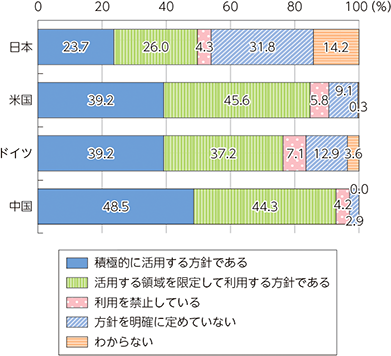
According to data published in the WHITE PAPER Information and Communications in Japan (総務省「情報通信白書」), Japan’s individual usage rate for generative AI remains significantly below countries such as China and the USA. While awareness of generative AI technologies has increased rapidly among Japanese consumers and enterprises, actual implementation and daily operational usage remain relatively limited.
https://www.soumu.go.jp/johotsusintokei/whitepaper/ja/r07/html/nd112220.html
The gap becomes even more visible at the enterprise level. Many Japanese companies are still evaluating how AI should be incorporated into existing workflows, governance structures, and internal systems. Rather than pursuing aggressive company-wide implementation, organizations frequently begin with small-scale pilot projects or highly restricted internal testing environments.
This cautious approach reflects several structural characteristics of the Japanese corporate environment.
First, Japanese enterprises traditionally place strong emphasis on operational stability, risk management, and long-term reliability. Technologies that may affect internal data governance, customer communications, or decision-making processes often undergo extensive evaluation before deployment. While this approach can reduce operational risk, it may also slow innovation cycles compared with markets where companies adopt emerging technologies more aggressively.
Second, many organizations continue to face significant digital transformation challenges unrelated to AI itself. Legacy infrastructure, fragmented internal systems, paper-based workflows, and labor-intensive approval processes remain common in parts of the Japanese corporate sector. For some companies, especially small and medium-sized enterprises (SMEs), AI adoption is not simply a matter of purchasing software. It requires broader operational modernization.
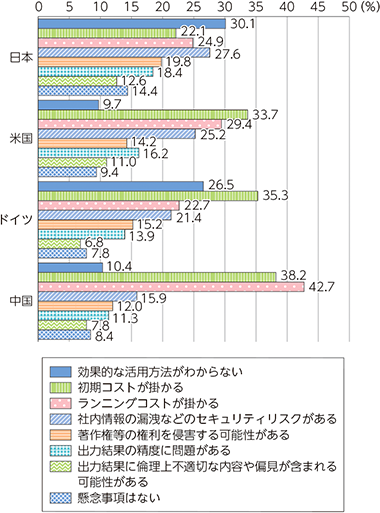
Third, uncertainty surrounding AI implementation remains widespread. Government surveys indicate that many businesses still struggle to identify practical use cases, evaluate return on investment, or determine how generative AI should be integrated into daily operations. Concerns regarding hallucinations, compliance risks, confidential information leakage, and internal governance are also frequently cited.
https://www.soumu.go.jp/johotsusintokei/whitepaper/ja/r07/html/nd112220.html
Importantly, this does not necessarily indicate a lack of interest in AI. Rather, it suggests that many organizations remain in the transition stage between awareness and operational deployment.
In practice, Japanese companies are increasingly exploring AI solutions in areas such as:
- internal document summarization
- customer inquiry support
- multilingual communication
- meeting transcription
- workflow automation
- software development assistance
- internal knowledge search systems
- HR and recruitment support
- marketing content generation
The market’s direction is therefore not defined by whether AI demand exists, but by how quickly organizations can overcome implementation barriers.
Why Japan’s AI Adoption Gap Matters
At first glance, slower AI adoption may appear to represent a competitive weakness. However, from a market perspective, the situation is considerably more nuanced.
Japan faces several structural economic pressures that are likely to increase long-term AI demand substantially.
One of the most significant factors is the country’s demographic situation. Japan’s aging population and shrinking workforce continue to intensify labor shortages across industries including manufacturing, logistics, retail, healthcare, hospitality, and administrative services. In many sectors, companies are struggling not only to recruit highly specialized talent, but also to maintain routine operational capacity.
As labor availability declines, enterprises are increasingly searching for ways to improve productivity without relying solely on workforce expansion. This is one of the strongest long-term drivers behind AI adoption in Japan.
At the same time, many organizations are under pressure to accelerate digital transformation initiatives. The COVID-19 pandemic exposed operational inefficiencies in numerous industries and highlighted the limitations of heavily paper-based or manually dependent workflows. Since then, interest in automation, cloud infrastructure, and digital operational management has expanded considerably.
Generative AI is now entering this broader digital transformation context.
Rather than replacing entire workforces, current enterprise demand in Japan is often centered around augmentation and operational efficiency. Companies are looking for technologies that can reduce repetitive administrative workloads, improve internal communication, accelerate information retrieval, and support employees facing increasing operational pressure.
This creates an environment where AI solutions capable of integrating into existing business processes may become highly valuable.
In other words, Japan’s slower adoption rate should not necessarily be interpreted as weak market potential. In many cases, it may indicate that the market is still in the early stages of large-scale implementation.
For AI vendors and technology providers, this distinction is important.
Highly mature AI markets can become saturated quickly, with intense competition and limited differentiation. Japan, by contrast, still contains substantial unmet implementation demand across multiple industries. Organizations are actively exploring solutions, but many still require guidance regarding deployment strategy, workflow adaptation, governance, security management, and localization.
The Major Barriers Slowing AI Implementation in Japan
To understand the Japanese AI market properly, it is essential to examine the factors currently slowing implementation. These barriers are not purely technological. In many cases, they are organizational, operational, and cultural.
Lack of Internal AI Talent
Many Japanese enterprises do not yet possess sufficient internal AI expertise to independently evaluate or deploy advanced AI systems at scale. This issue affects both large corporations and SMEs, although in different ways.
Large enterprises may possess stronger technical resources, but frequently struggle with internal coordination, governance alignment, and organization-wide deployment. SMEs, meanwhile, often face more direct resource limitations, including shortages of specialized personnel and budget constraints.
As a result, companies increasingly require external support for:
- implementation planning
- workflow analysis
- system integration
- prompt optimization
- governance policy creation
- employee training
- operational support
Localization Requirements
Localization represents one of the most important characteristics of the Japanese enterprise AI market. Many overseas AI products entering Japan underestimate the complexity of adapting to Japanese business operations. The challenge extends far beyond language translation.
Japanese enterprises often require:
- highly formal business communication styles
- industry-specific terminology adaptation
- integration into approval-heavy workflows
- customized reporting structures
- Japanese-language documentation
- local customer support
- compatibility with existing operational systems
Even highly capable global AI products may face adoption difficulties if they cannot align with Japanese enterprise expectations. For this reason, localization is becoming a major competitive factor in Japan’s AI market.
Security and Governance Concerns
Security concerns remain one of the largest barriers to generative AI deployment among Japanese enterprises.
Organizations are particularly cautious regarding:
- confidential information leakage
- cloud-based data handling
- external AI model usage
- compliance obligations
- hallucination risks
- copyright concerns
Many companies therefore prefer controlled deployment environments, including:
- private AI environments
- enterprise-specific AI systems
- restricted internal usage policies
- hybrid cloud approaches
This creates growing demand for enterprise-grade AI governance frameworks and implementation support.
Legacy Operational Structures
Japan’s corporate environment still contains a significant number of legacy workflows and operational systems. In many organizations, AI implementation cannot occur independently. It must be integrated into broader digital transformation initiatives involving:
- workflow modernization
- cloud migration
- process standardization
- internal communication reform
- documentation digitization
As a result, AI vendors that understand operational transformation may possess advantages over providers focused solely on standalone AI functionality.
Sectors With Particularly Strong AI Demand Potential
Although adoption remains uneven, several industries are showing particularly strong long-term AI demand potential.
Manufacturing
Japan’s manufacturing sector remains one of the country’s most globally influential industries. Manufacturers are increasingly exploring AI applications for:
- predictive maintenance
- quality inspection
- production optimization
- technical documentation
- multilingual operational support
- supply chain analysis
Given the sector’s scale, even incremental productivity improvements may create substantial economic impact.
Healthcare and Elderly Care
Japan’s demographic pressures are generating increasing demand for operational support technologies in healthcare and elderly care environments. Potential AI applications include:
- documentation support
- scheduling optimization
- patient communication assistance
- internal workflow automation
- knowledge management
While regulatory and privacy considerations remain significant, long-term demand is expected to expand.
Customer Service and Back-Office Operations
Customer support, administrative operations, and internal documentation management are among the most actively explored AI implementation areas. Japanese enterprises frequently manage large volumes of:
- formal documentation
- customer communication
- internal reports
- compliance records
Generative AI tools capable of reducing administrative burden may therefore provide strong operational value.
Human Resources and Recruitment
Labor shortages are also affecting recruitment operations. AI-assisted HR solutions are increasingly being evaluated for:
- resume screening
- interview scheduling
- multilingual recruitment communication
- internal talent management
- onboarding support
As hiring competition intensifies, operational efficiency within HR departments is becoming increasingly important.
Why Overseas AI Companies Are Watching Japan More Closely
Interest in Japan’s AI market is growing not only domestically, but internationally.
Several overseas AI companies and technology providers have already expanded operations, formed partnerships, or strengthened investment activity within Japan. Government-supported ecosystem initiatives and organizations such as JETRO have also become increasingly active in promoting collaboration between Japanese enterprises and foreign technology companies.
From a business perspective, Japan offers several important advantages:
- one of the world’s largest enterprise markets
- strong purchasing power
- advanced industrial sectors
- long-term customer relationships
- increasing government AI support
- growing digital transformation demand
At the same time, market entry remains complex. Foreign companies frequently encounter challenges involving:
- localization requirements
- lengthy enterprise sales cycles
- relationship-building expectations
- regulatory compliance
- support quality standards
- Japanese-language operational requirements
As a result, partnership-oriented market entry strategies are often more effective than purely independent expansion approaches. This environment creates growing importance for:
- consulting support
- localization partners
- implementation specialists
- enterprise integration providers
- business development intermediaries
In many cases, success in Japan depends not only on technological capability, but also on operational adaptation and market understanding.
Emerging Signs of Acceleration
Despite current barriers, multiple indicators suggest that Japan’s AI market is entering a more active expansion phase.
Government initiatives such as 「GENIAC」 are supporting domestic AI ecosystem development and encouraging large language model research and commercialization. Japanese enterprises are also gradually moving from experimentation toward practical operational deployment.
At the same time, domestic AI startups and technology companies are expanding partnerships with major enterprises across industries including telecommunications, manufacturing, finance, and customer support.
Rather than experiencing a sudden AI “boom,” Japan may instead undergo a more gradual but deeply integrated implementation cycle. This process may initially appear slower than developments in some overseas markets, but it could ultimately produce highly stable long-term enterprise adoption.
For AI providers capable of supporting localization, operational integration, governance alignment, and enterprise trust-building, the Japanese market may offer substantial long-term opportunity.
Business Implications for AI Providers
Japan’s AI market is entering a transitional phase where demand is increasing faster than implementation capability.
Several important implications are emerging for AI companies, technology providers, and overseas businesses considering expansion into Japan:
- Many Japanese enterprises still require implementation guidance rather than standalone software products.
- Localization remains a critical competitive factor, particularly for enterprise workflows and Japanese-language operations.
- Security, governance, and operational trust are major purchasing considerations.
- Partnership-oriented market entry strategies may be more effective than direct expansion models.
- Industries facing severe labor shortages may become major drivers of future AI adoption.
For companies capable of adapting to Japanese business requirements, the current market gap may represent a significant long-term opportunity rather than a temporary delay in adoption.
Summary
Japan’s slower pace of AI adoption should not be misunderstood as a lack of market potential. In reality, the country is entering a large-scale transition period shaped by demographic pressure, operational modernization needs, labor shortages, and growing enterprise interest in automation and productivity enhancement.
The current gap between AI demand and implementation capability is creating a rapidly evolving business environment. Enterprises across industries are increasingly aware that AI will become an important operational tool, yet many organizations still face uncertainty regarding deployment, governance, integration, and localization.
This combination of rising demand and implementation friction is precisely what makes Japan one of the most strategically important AI opportunity markets in the coming years.
For AI solution providers, technology partners, and global companies considering expansion into Japan, the key challenge may no longer be whether the market needs AI, but how effectively those solutions can be adapted to Japan’s unique operational and business environment.
Feel free to contact us
MAY Planning provides advisory services on Japan AI market-entry and AI workflow integration. We also offer support on Japanese business partnership development, AI vendor matchmaking and partnership coordination, AI solution localization for Japanese enterprises and cross-border technology collaboration.
References:
1)令和7年版 情報通信白書の概要 企業におけるAI利用の現状. (n.d.). 総務省. https://www.soumu.go.jp/johotsusintokei/whitepaper/ja/r07/html/nd112220.html
2)令和7年版 情報通信白書の概要 日本のAI開発・事業展開の動向. (n.d.). 総務省. https://www.soumu.go.jp/johotsusintokei/whitepaper/ja/r07/html/nd112130.html
3)GENIAC. (n.d.). 経済産業省. https://www.meti.go.jp/policy/mono_info_service/geniac/index.html
4)【2025年最新】日本のAI企業26選!提供サービスや事例を紹介. (2025, November 14). EXAWIZARDS. https://exawizards.com/column/article/ai/japanese-ai-companies/
5)木内翔大. (2026, June 15). 【2026年最新】日本の生成AI企業18社!大手からベンチャーまで紹介. SHIFT AI TIMES. https://shift-ai.co.jp/blog/3069/
6)米オープンAIが日本法人を開設. (2024, April 19). JETRO. https://www.jetro.go.jp/biznews/2024/04/b0fc62a3e6d46896.html
7)AI自動生成ソリューションプラットフォームを開発・提供する米国企業AI Dynamicsが東京都に日本法人を設立. (2021, July 15). JETRO. https://www.jetro.go.jp/biznews/2024/04/b0fc62a3e6d46896.html
8)医療人工知能(AI)専門企業AITRICS、東京都に事務所を設立. (2025, November 20). JETRO. https://www.jetro.go.jp/invest/newsroom/2025/c7e8539856cd8d58.html
9)AI開発支援のワークフローを通じてデータ活用、AI導入、ビジネス最適化ソリューションを提供するSOLAZU Holdingが、神奈川県横浜市に日本法人を設立. (2025, October 22). JETRO. https://www.jetro.go.jp/invest/newsroom/2025/6939e35f2e9e1abf.html